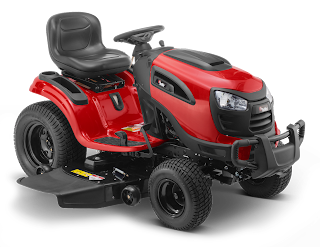
Problems with a traditional tractor or mower
- Noise and gas pollution: After mowing, the operator smells like gas and may have ringing ears.
- Fatigue: Continuous steering and rubbernecking to monitor the work takes a toll.
- Vibrations and bumps: A bumpy ride can cause numbness in joints and muscles.
- Environmental exposure: The operator endures cold or heat in the yard while mowing.
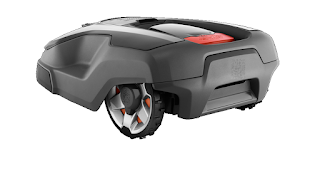
Problems with commercially available robotic mowers
- Risk of theft
- Risk of accidents or the mower getting stuck on large or uneven yards
- No control over mowing patterns
- No real-time feedback or supervision
- Expensive investment for small machinery with a delicate blade; cannot use an existing mower
- Limited to mowing — not useful for mulching, aerating, rolling, or moving equipment
- Elaborate boundary setup (trenches, perimeter wire)
- Difficult to run multiple zones in succession
The solution
Mobimower is a robotic retrofit that attaches to an existing zero-turn mower and provides automation comparable to dedicated robotic mowers — with more flexibility.
- Works on any zero-turn mower with two controlling arms
- Supervision and real-time feedback on arm and mower position (cloud; mobile hotspot on the mower)
- Visual feedback via cameras so the operator can work from shade or comfort
- GPS for predefined paths and autonomous runs
- Failsafe kill switch wired to the seat safety circuit — stops on disconnect, fault, or intentional stop
- Ultrasonic sensors and AI-based cameras for obstacle awareness
What is Mobimower
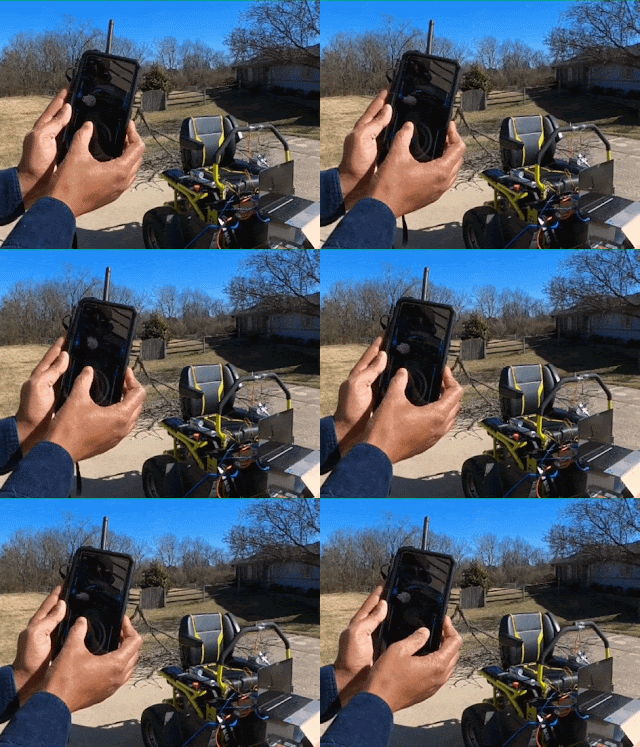
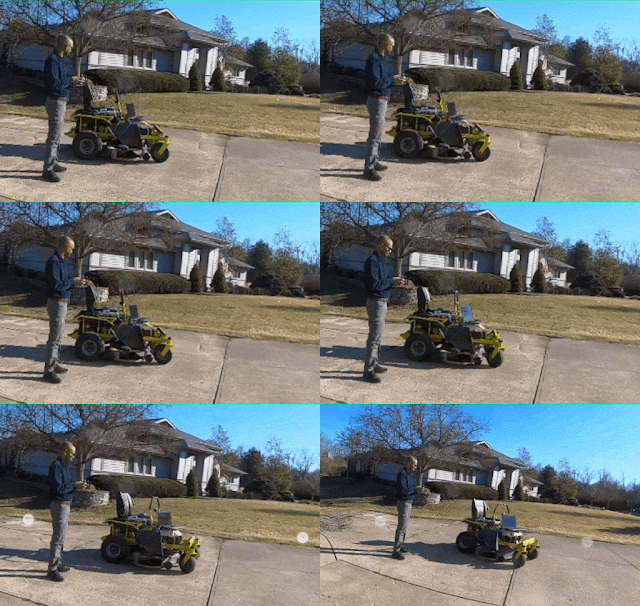
Mobimower (patent pending) evolved from a homeowner’s need to make lawn maintenance practical on a large property. It is a robotic controller that attaches to any zero-turn mower and converts it into an autonomous lawn mower.

How we got here — prototype evolution
It took about six months of prototypes, code, calibration, and safety-circuit rework before a viable product was ready for its first field run in February 2022.
- Mobimower 0.1: No positioning dead zone — actuator hunted back and forth.
- Mobimower 0.2: AI and visual feedback for arms; not deployment-ready — discarded.
- Mobimower 0.3: Potentiometer feedback — clunky, fatigue-prone — discarded.
- Mobimower 0.4: Missing RC sink circuit; relay failure — capacitor replaced.
- Mobimower 1.0: DC linear actuators, closed-loop ultrasonic feedback; tripped safety switches.
- Mobimower 1.1: Added relays to sync safety switches — first successful motion (with memorable bloopers).
- Mobimower 2.0: Stepper motors, open-loop, lock-and-go manual/auto switching — ready for install and test.
- Mobimower 3.0: GPS navigation, autonomous mowing, path planning — in development.
- Mobimower 3.a: Exploring direct integration with electric mower control modules.
- Mobimower 4.0: Future — traditional steering tractors and agricultural equipment.
Next steps at the time: Move from prototyping to production models; migrate Python to Android; universal calibration; garage-door integration; additional relays for mower switches.
Tools and technology
Glossary of terms, tools, and technologies used, experimented with, or evaluated in the Mobimower project.
- Python
- Linear actuator
- USB relay
- SPDT relay bank
- Failsafe switch
- OpenCV
- AI
- RF transceiver
- Arduino
- Ultrasonic sensor
- Potentiometer
- Magnetic Hall sensor
- GPS
- RTK GPS
- Stepper motor
- Stepper motor driver
- Azure cloud, blob, and queues
- USB serial
- Android
- Pydroid
- Multithreading
- Ryobi, Craftsman, John Deere, Toro, Cub Cadet, Husqvarna, Ego
- HDMI capture card
- Momentary relay and push limit switch
- M6–M8 adapter
- H-bridge
- Open-loop and closed-loop systems
- T8 lead screw
- PWM